Nov 19, 2026
Woven Accent Chair Wholesale: What Importers Should Check Before Buying?
If someone wants to buy a lot of woven accent chairs, they should think about six things: the frame and weave construction, the exact materials, the load capacity, the compliance papers for the final market, sample approval with inspection rules, and the total cost when it gets to the customer. The pictures only show what the chair looks like. They don't show how strong the joints are, how even the fibers are, or how well it can handle ocean freight. Everything on this list is crossed off. This is how I show you how to use our YiBo model YB-1129-1. After that, you can look at any supplier's quote next to these well-written notes.
Start With the Project, Not the Photo
Why a Woven Accent Chair Needs More Than a Visual Check?
There are woven accent chairs in homes, coffee shops, hotels, and showrooms. They look nice and are comfortable to sit in. That appeal can hide risk. After months of use, the joints will come apart, but the weave will still be tight. The bigger piece will also look the same as the piece that was approved. But a display sample can only show you these things. When people buy from other countries, they often complain about things like loose fibers, the wrong materials, color differences between batches, damage during shipping, and unclear warranty terms. When things go wrong, it's tough to make money and keep customers. There are many things about the chair that you should check out, such as the style, frame, finish, shipping, and customer service. It's more likely that the chair you buy will cost the same as the quote you agreed to if you look at those pieces early on.
Define Your Application and Target Customer
Before you look at quotes, you should decide where the chair will go. Places like a home, hotel, restaurant, storefront, or a contract area with a lot of foot traffic need different types of materials, grades of durability, and paperwork. Next, give the style a name, such as "boho," "natural fiber," "retro," or "affordable luxury." Next, make a specification sheet that lists the cushion's size, height, frame, weave, finish, color tolerance, packaging, delivery terms, and rules for the final market. Tell them how many items you need and what the minimum order quantity (MOQ) is. Tell them when you want to sell them and how you're going to get more. Everyone can quote on the same item with a clear sheet, so you don't have to worry about getting different prices.
Measure Comfort, Size, and Usability
The person sitting in the chair should also be the right size for the room. Make a note of the seat's height, width, and depth. Write down the angle of the back, the size of the box, and how much space there is for doors or elevators where the installation will happen. It's good that chairs with arms take up more floor space. Aside from that, chairs without arms can be used in more ways and in smaller rooms to serve guests. Make sure that people of different sizes can sit on the seat and check the fit, firmness, airflow, and cushion rebound. The base of our YB-1129-1 is 50 x 60 cm (19.7 x 23.6 inches), and it can be as tall as 113 cm (36.6 inches). It's good for small rooms because of this.
Check Materials, Construction, and Chair Types
Evaluate Materials and Construction
What kind of material and how well it was put together determine how well a chair works after it has been set up. Check out a few different types of rope, seagrass, water hyacinth, paper cord, and wooden cane before you buy something. Also, make sure you know what each one is made of. Frames can be made from metal, wood, or a mix of the two. Make sure the frames are straight and that the joints and places where the frames are held together are in good shape. It's smooth and doesn't have any sharp edges or broken strands. This means the weaving is good. When it comes to upholstered models, you should find out how dense the foam is, how long it takes for the cushions to recover, how well they are sewn, how long the fabric stays the same color, and what fire safety standards they meet. If you write down your answers to these questions, you'll have a place to start for test approval and then bulk checks.
Compare Woven, Rattan, and Upholstered Options
Buyers often get the terms mixed up for a woven accent chair, so let me first explain what they mean. Something that is "woven" is made of rattan. Rattan isn't always used to make woven chairs, but it is sometimes. Things look lighter, are more interesting, and let air flow through them when you weave patterns into them. Most of the time, an upholstered chair is better if you want something soft. How much do standard, handwoven, and upholstered woven designs cost? How long do they take to make? How consistent are they? How can you make them your own? Hotels should have long-term contracts and help with finding new staff. It is good for designers to have samples that are simple to change. Plus, OEM clients should have brand names, drawings, and clear instructions. It should look good and fit the way you sell.
Reading the YB-1129-1 Specification
This is what I would look for in a similar offer to YB-1129-1 in terms of specs:
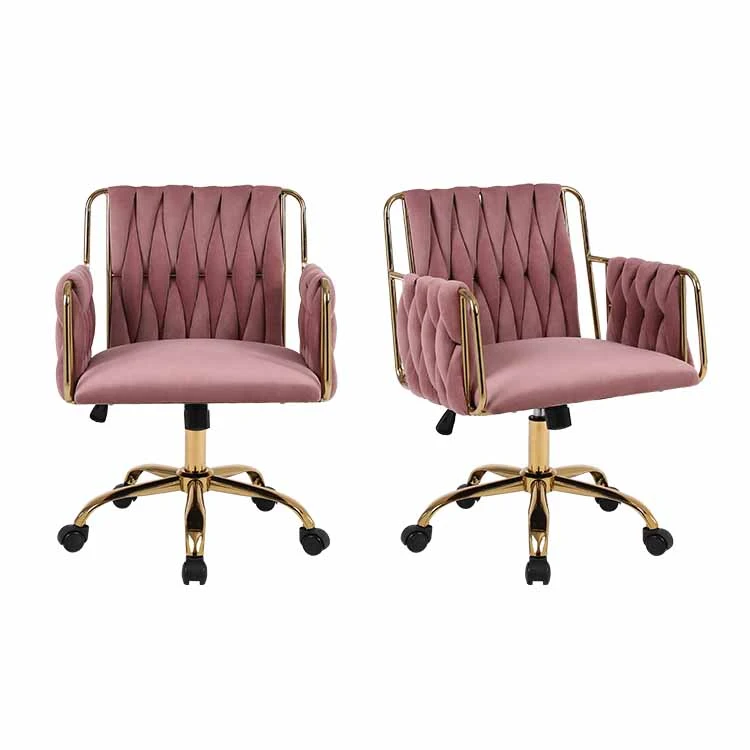
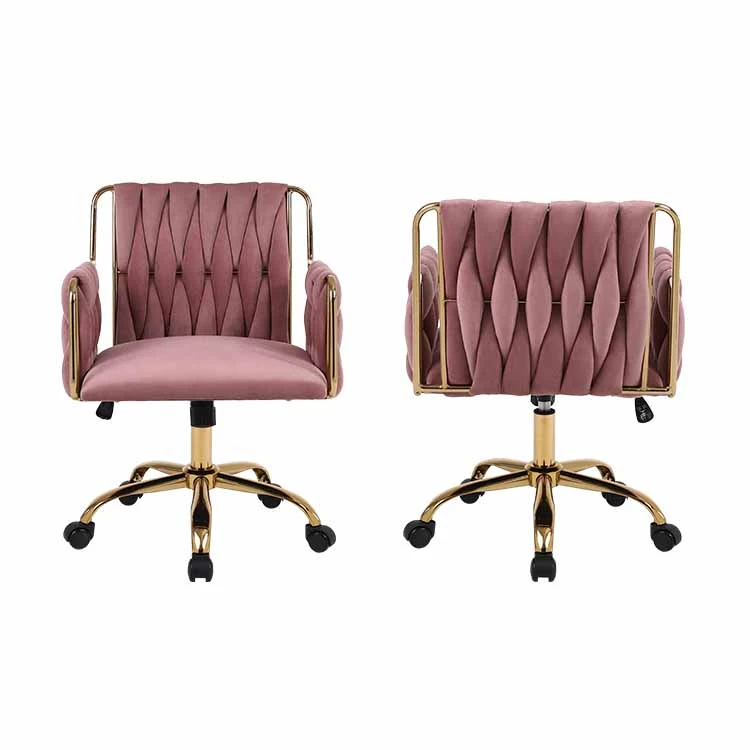
- Upholstery and cushioning: The seat uses 290g velvet over ordinary sponge. Velvet gives a soft hand feel and a rich look for retro or affordable luxury lines. Ask every supplier to state fabric weight and sponge type in writing, because both affect comfort, appearance, and how the cushion recovers over time.
- Gold-plated metalwork: The chair has 280mm gold-plated stretching feet and a gold-plated 100# secondary air rod with a tray plastic handle. The gold finish supports the retro, affordable luxury look. Request finish samples, and ask how the supplier checks plating color consistency from one production batch to the next.
- Mobility: Black and white PU wheels, described as silent PU casters, slide smoothly without scratching office floors. Check wheel finish and fit on the floors your customers use, such as laminate, tile, or hardwood, and confirm the result on the approved sample before bulk production.
This gives you something to compare the quote to, so you can use facts instead of generalizations.
Verify Durability, Safety, and Compliance
Test Load Capacity and Structural Strength
Before you buy chairs, make sure they can handle all the use they will get. How long do the seat and back last? How well do they hold up after being used a lot? Think about how strong your arms and legs are, how fast the chair can fall, and how long it takes for your joints to get tired. Look for signs of sagging, broken fibers, or a loose connection where the woven surface and frame meet when you look at them together. The SGS-certified gas lift on the YB-1129-1 lets you know the part number and ensures it will work. It can hold up to 280 pounds. You can also ask any US supplier if their chairs have been checked to make sure they meet ANSI/BIFMA X5.1, which is a standard for all-purpose office chairs.
Match Certificates to the US Market
YB-1129-1 has REACH, EN 12520, and BS 5852 written on it. The European Union makes these rules, which are known as REACH. EN 12520 says that home furniture must be safe, strong, and last a long time. BS 5852 is what the British use to see if upholstered furniture can catch fire. They did well on some tests, but the rules in the US are different. TB 117-2013 says that padded furniture can catch fire. You may also need to look at the EPA's TSCA Title VI limits on formaldehyde in composite wood and Proposition 65 labeling if you're selling your goods in California. Before you go, let the supplier know what state you'll be visiting. Also, talk to a compliance adviser to find out what paperwork you need.
Check Warranty, Upgrades, and Sustainability Claims
The warranty terms for a woven accent chair are just as important as the test results. For one year, you can get the YB-1129-1 with ease. To file a claim, you need to write down the steps, a picture, and how to get a new part. You can also make the model out of materials that won't break when hit, smashed, or exposed to weather. This is helpful if your customers want a stronger option for places where a lot of people walk by. Be careful when someone says they can last. You can ask for proof, like being able to keep track of the fibers, recycled content, low-VOC finishes, and forests that are well taken care of. Someone who replies with facts instead of catchphrases will likely earn your trust when you place a second order.
Audit the Supplier, Samples, and Quality Control
Confirm You Work With a Manufacturer
Find out if the business makes woven accent chairs, sells things, or finds things. Direct manufacturers make the product, make changes, make sure the quality is good, set prices, and manage lead times. Traders can give you a lot of choices. Find out how many frames are finished every month, how they're sent overseas, and what happens with orders that come back. A trustworthy supplier should send information about the business, a list of materials, test reports, instructions on how to check the goods, information about packaging, warranty terms, and project references. YiBo has an R&D team, OEM and ODM services, and a lot of different goods. It's been around for over ten years. We answer questions in 24 hours or less, and these things help long-term programs work better.
Approve Samples and Set Tolerances
When you place a large order, make sure that the copy is an exact copy of the approved pre-production sample. You should write down the colors, finishes, logos, weaving details, sizes, and the amount of natural variation that is okay. The steps are shown and written down to help you. Set rules about size, color, small fibers, gaps, alignment, and structural flaws before you start making them. Natural fibers come in different types, so agree on what is right and wrong. Any big changes should be agreed upon in writing, and a record of all the changes should be kept. With YB-1129-1, you can change their color, material, and base. Check the sample to make sure you like all the changes before you place the order.
Plan Inspections and Score Your Suppliers
The goods should be checked by people outside the company while they are being made, before they are shipped, or while containers are being loaded for larger orders. It's important to talk about the materials that are sent, how the frame is put together, weaving, upholstery, putting it together, making sure it's stable, finishing it, and packing it up. Next, you need to rate each of your suppliers with five stars. The most important things to me are how well the product works and how well it is put together. Then there are things like pricing, logistics, communication, service after the sale, capacity, and following the rules. A standard catalog supplier can quickly get you what you need, and an OEM factory is great for businesses that want to make their own brands. For cheap collections to work, hotel projects need to know how long things last. There should be no changes to the prices. On the same sheet, give each supplier a score. You can then tell your team and customers which supplier you chose instead of going with your gut.
Calculate Landed Cost, Packaging, and Final Checks
Count the Total Landed Cost
The price per unit given is only for a part of the whole purchase. There are many costs that go into the price of something. Some of these are samples, tools, customization, packaging, freight, insurance, duties, taxes, customs fees, storage, final delivery, shipping within the country, and more. If the chair doesn't last as long, needs to be returned, or comes broken, it may cost more in the long run. Get the best deal on MOQ and price breaks for common items, custom colors, mixed SKUs, samples, and orders that are placed more than once. Figure out how long it will take to get samples, buy materials, make the product, test it, and send it out. Next, add some extra time to account for launch dates and the number of people who can join at different times of the year. Make a list of how you will be paid and any price changes that need to be made. Check with your customs broker to get the most up-to-date US duty rates before you make a budget.
Review Packaging and Import Documents
The frame, legs, arms, weaving, cushions, and finishes should all stay safe in their boxes while they are being shipped by ocean. In a 0.2 CBM box that is 68 x 68 x 44 cm (about 26.8 x 26.8 x 17.3 inches), there are two YB-1129-1 items. That's about 38 to 42 pounds. Each box weighs about 19 kg, or 38 to 42 pounds. Check the boxes' strength, how high they can be stacked, and how they are packed. The HS code, the country of origin, the bill, the packing list, the labels, the care instructions, and the origin certificate should all always be on hand. Pick an Incoterm too, like FOB, CIF, or DDP. There are also things like humidity, assembly, spare parts, and returns to think about in the warehouse.
Finish With a Written Pre-Order Checklist
Before you place a big order, read everything and make sure you understand it. Write down the sizes of the product, any tolerances, the types of materials used, how the frame is made, the weaving, the upholstery, and any samples that have been approved. You should list the tests, inspection standards, load capacity, warranty, and how to make a claim to make sure the quality is good. You should list the amount of the minimum order (MOQ), price breaks, deposit, lead time, packaging, shipping terms, import documents, and help with replacements in your business terms. Write down where the parts come from, whether they can work with OEMs, how they talk to each other, how they handle changes, and how long the project has been going. Sign the list and give it to the supplier. Before making big changes, this small step should be taken to make sure that everyone agrees on it. It also gives orders that come back a steady place to begin.
Conclusion
It's better to see a real woven accent chair than a picture of one when you're buying a lot of them. The article started by explaining what the project was. The next step was to make sure of the building materials and methods. In the end, it compared and looked at how rattan, woven, and upholstered types were sold. It was checked to see how much weight it could hold and what the rules were for the final market. The bulk and the sample must match. To make sure of this, there are regular checks, audits of the suppliers, and approved samples with written tolerances. To find the real margin, you need to look at the import documents, the carton data, and the total cost the goods arrived at. The YB-1129-1 specs show that it's better to compare prices when there are clear numbers on the fabric, metalwork, load capacity, certificates, and packaging. You won't have to deal with unpleasant surprises that cost a lot of money. Make sure that a signed list connects all of these checks.
FAQ
What should I check first when I buy a woven accent chair wholesale?
Make a list of what you want to do and what you need it to do. First, check the frame's load capacity, compliance documents, materials, and construction. After that, look at the prices. That way, you can check what the seller says for yourself. Ask for test reports and a chair from the last few months.
Is a woven chair the same as a rattan chair?
The word "woven" means the way something is made, not what it is made of. Rattan, paper cord, seagrass, or man-made fibers can all be used to weave a chair. This is because a product's name doesn't always tell you everything you need to know about it. The provider should give you a list of the materials and what they are made of.
Can YB-1129-1 be customized for my market?
Yes. The model's colors, bases, and materials can be changed. You can also use better materials that can stand up to weather, shock, and impact. It has a one-year warranty and can hold up to 280 pounds. We need to know what you want to do and who you want to reach in order to set up the right thing.
Request a Woven Accent Chair Quote from YiBo
There are many woven accent chair suppliers out there. You can do OEM and ODM, and they will get back to you within 24 hours. Send an email to yb@ajyibo.com with your order number, references, target market, and port of destination to get in touch with YiBo. For a long time, our R&D team has been making furniture. They can help you compare samples, lead times, and the amount of extra work you can do. Yibofurniture.com is where you can find out more.
References
1. European Chemicals Agency, REACH Regulation (EC) No 1907/2006, 2006
2. European Committee for Standardization (CEN), EN 12520: Furniture – Strength, Durability and Safety – Requirements for Domestic Seating, 2015
3. British Standards Institution, BS 5852: Methods of Test for Assessment of the Ignitability of Upholstered Seating by Smouldering and Flaming Ignition Sources, 2006
4. BIFMA International, ANSI/BIFMA X5.1 General-Purpose Office Chairs – Tests, 2017
5. California Department of Consumer Affairs, Technical Bulletin 117-2013: Requirements, Test Procedure and Apparatus for Testing the Smolder Resistance of Materials Used in Upholstered Furniture, 2013
6. U.S. Environmental Protection Agency, Formaldehyde Emission Standards for Composite Wood Products (TSCA Title VI) Final Rule, 2016